A Federation Wallet Held Over Four Thousand Bitcoin Three Days Ago, and a Software Bug Left It With Just 197 — Bitcoin's Main Chain Never Missed a Beat, Because What Got Drained Was Never Bitcoin, It Was an IOU Signed on Its Behalf!
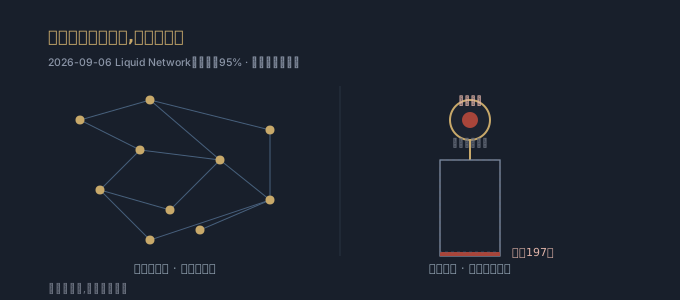
Two readings have been making the rounds. One casts this as a heist story with a twist: the “hackers” were actually white hats, playing by rules, attaching conditions, returning the funds in installments — crisis resolved, everybody happy, Bitcoin unscathed. The other treats it as just another rerun of crypto’s endless security failures, proof the industry still can’t keep its house in order. The two readings look like opposites, but they share the same disease: both assume Bitcoin is the protagonist here. It never was. What got drained was never Bitcoin. It was an IOU — signed, sealed, and never once shown to the party it claimed to represent.
Late Sunday night New York time (September 6), something went wrong at Liquid Network, the Bitcoin federation sidechain run by Blockstream. The sidechain’s pitch was faster, more private settlement for exchanges and institutions than the main chain offers — and the price of that speed was compressing “security” down from the main chain’s thousands of independently verifying nodes into a handful of keys held by a small group of “federation members.” Nobody thought twice about it, because for years those few keys had worked together without a hitch. The moment things broke, the arrangement showed its true shape: a bug in Elements, the software underneath Liquid, let someone trigger a peg-out the system itself deemed valid — without ever stealing a single key, just by feeding it a signal that should never have passed as legitimate. This wasn’t picking a lock. It was finding a gap in the door the system never knew it had, and walking the money out through it in broad daylight, “legitimately.”
The damage was plain to see: a wallet that had been holding over four thousand bitcoin was down to 197 after a handful of transactions — close to 95% of the entire reserve, gone overnight. The sidechain froze immediately; exchanges were told to halt L-BTC deposits and withdrawals. Meanwhile, Bitcoin’s own main chain didn’t pause for a second. No emergency meeting, no committee vote — it just kept minting blocks, one every ten minutes, the way it always has, the way nothing anyone does can make it stop. Same weekend, two chains: one paralyzed, one running exactly on schedule. That contrast is the whole answer.
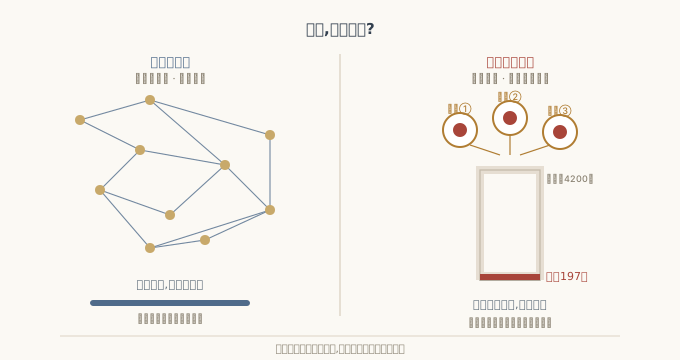
Here’s the reframing that matters: trust that a single button can empty was never Bitcoin’s trust — it was Bitcoin’s IOU. L-BTC, the token the sidechain issues, is fundamentally a promise: “hand us your bitcoin, the federation locks it up safely, and this receipt in your hand can be redeemed for a real one anytime.” Day to day, that promise trades and settles exactly like the real thing, and nobody bothers to tell them apart. But a promise is still a promise — not the collateral itself. The moment one key misfires, the promise stops being redeemable, while the thing the promise was supposedly backed by — the Bitcoin main chain — has no idea it was ever pledged as collateral, and takes no damage when the pledge goes bad. This isn’t Bitcoin’s credibility taking a haircut. Bitcoin’s credibility was never actually moved into that federation wallet in the first place. What got moved in was a sentence.
As of today (September 8), that sentence is being walked back, piece by piece. The actors have returned 3,400 BTC in installments — paying back close to nine-tenths of the debt — on one condition: that Blockstream patch the bug first. Blockstream did, and the two sides spent two days trading messages recorded on the blockchain, publicly repaying a ransom in stages. 598.5 BTC is still sitting with them, with no resolution yet. The negotiation itself makes the point: trust that can be talked back into existence was never grounded in cryptographic certainty to begin with — it was grounded in whether a handful of people felt like keeping their word. That’s a fundamentally different mechanism from the one running Bitcoin’s main chain, which answers to math, to hash power, to a protocol no single party can unilaterally halt. One is a network doing its own accounting. The other is a few people negotiating.
Early on, the story a federation sidechain tells sounds airtight: multisig, mutual checks among members, one-to-one pegged to the main chain — security that looks borrowed from Bitcoin itself, a clean, natural inheritance. By the end, the story collapses to one fact: the moment the software logic behind those few keys slips once, the borrowed security reveals itself for what it always was — an IOU — and what’s owed comes due without mercy. This isn’t an accident that broke the pattern. It’s the pattern completing itself: any design that compresses distributed computation down to a handful of decision points enjoys the efficiency in ordinary times and, the day something breaks, pays back the full cost of that concentration — all at once, no discount.
At bottom, people building systems keep reaching for the same shortcut — collapsing something meant to be checked by thousands of independently verifying nodes into a small, manageable, coordinatable committee that can just hold a meeting when something goes wrong. That shortcut runs fast and smooth, on one condition: that nobody underestimated the complexity it compressed away. This bug wasn’t anyone acting in bad faith. It was software that believed it had the whole system under control, running into an input it never imagined — and betting the safety of an entire ledger on a handful of keys is always a bet that the underlying logic has no blind spots. Complex systems never discount the bill just because the designer felt confident.
There is no stand-in for Bitcoin. There is only Bitcoin's own chain — one block every ten minutes, and nothing anyone can do to make it stop.
SECURE PAYMENT VIA STRIPE
Subscribe: $50 annual pass unlocks every paid article on this site for one year
Go deeper: Ko-fi members get a weekly members-only deep dive, from $3/month Become a member →