September Payrolls Added Just 29,000 and Unemployment Rose to 4.2%, Stocks Rallied Friday, and the Market Says "Bad News Is Good News" Again — But July Has Now Been Printed Three Times, From –23,000 to +21,000 to –10,000, Flipping Sign Twice: the First Print Is a Quote, the Revision Is the Ledger!
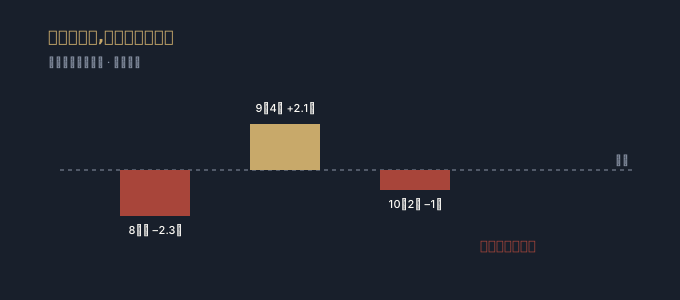
Payrolls are not a number. They are a line that keeps being rewritten, and the market trades the first quote while the economy writes the final ledger.
On Friday, October 2 (US Eastern), the September jobs report came in at just 29,000 new jobs, with unemployment up from 4.1% to 4.2%. The market’s reflex was almost mechanical. Stocks closed higher, tech led, and the Nasdaq touched a record high intraday, because the data cut the odds of another rate hike at the October meeting. Bonds were more hesitant: yields fell at first, then drifted back during the session. The popular reading followed on cue: the economy is cooling, the Fed can stop, bad news is good news again.
That story rests on a premise nobody checks: that Friday morning’s 29,000 is a finished number. It isn’t.
Look at the July line. In early August it was first printed at –23,000 jobs. On September 4 it was revised to +21,000. On Friday it was revised again, to –10,000. One month, three readings, and the sign flipped twice. August is a staircase: printed at 162,000 on September 4, rewritten to 133,000 on Friday. Together, July and August were marked down by 60,000 in this one revision.
Direction matters here. Revisions do not always go down. The September 4 revision lifted June and July, and the story that day was “the labor market is tougher than we thought.” When the Fed hiked on September 16, that was the ledger on the table: July at +21,000, August at 162,000. Today’s ledger has thinned both lines.
I am not grading that hike. I am pointing at a mechanism: policymakers and traders price off the latest first print every single time, and the first print is the weakest segment of the line. It is built from questionnaires that haven’t all come back; later responses straighten it out. The first print is a quote. The revision is the ledger.
Run the logic both ways and you get a mirror. When the ledger is revised up: ① this month is lifted by later data, ② the “economy is running hot” narrative strengthens, ③ markets price more hikes, and higher rates then lean on next month’s hiring — tightening rewrites the data that follows. When the ledger is revised down: ①′ this month is pulled lower, ②′ the “cooling” narrative strengthens, ③′ markets price a pause, and the easing in expectations props up risk assets. It is one loop: data rewrites expectations, expectations rewrite prices, prices feed the next print. The reflexivity hides in the step where a first print is treated as a verdict.
So “bad news is good news” is, at bottom, a timing mismatch. It buys today’s first print and bets on tomorrow’s policy, while the thing that should decide policy is a line that won’t be finalized for months. Stocks rising today means the market won this vote on the quote. It does not mean the economy is weakening, and it does not mean weakening is good for equities — that depends on where the line finally lands.
None of this makes Friday’s report meaningless. The jump in unemployment to 4.2% comes from the household survey, a direct survey count, not a number reverse-engineered from anything else. And it is not a buy or sell signal. What can be said is narrower: pricing a meeting off a number that will probably be revised is writing the whole ledger in pencil.
In that sense, the moment a figure is published is the moment it has least earned the right to be called truth. Markets want to read the world at first glance, but the world finishes writing itself one revision at a time.
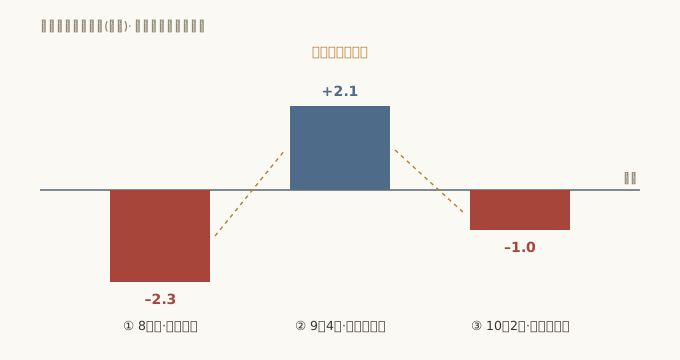
The first print is a quote, the revision is the ledger; whoever reads the world must wait for it to finish writing itself.
SECURE PAYMENT VIA STRIPE
Subscribe: $50 annual pass unlocks every paid article on this site for one year
Go deeper: Ko-fi members get a weekly members-only deep dive, from $3/month Become a member →