Spot Bitcoin ETFs Took In $2.4 Billion Last Week, the Strongest Since October, and Flipped Their Year-to-Date Total Positive After a $5.8 Billion Hole — Everyone Says the Institutions Are Back. But Monday Brought $1 Billion and Friday Only $130 Million: the Running Total Is Rising While the Speed Is Dying. Buying Pressure Is Read in Speed, Not Position!
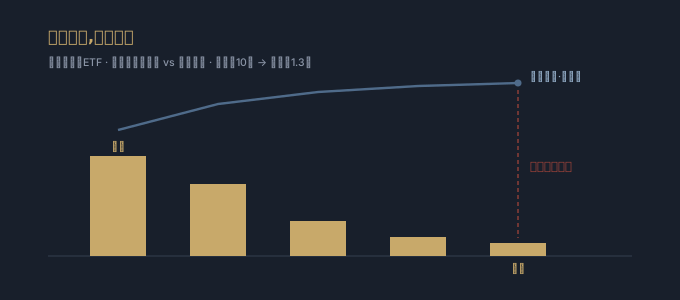
Bitcoin ETF demand is not a matter of how much money has come in. It is a matter of how much is still coming in.
Last week, U.S. spot bitcoin ETFs pulled in about $2.4 billion, their strongest week since October 2025. The year-to-date ledger flipped too: in mid-July these funds were roughly $5.8 billion underwater, and now they are back in small positive territory. The popular reading followed on cue: the institutions are back, money is voting with its feet, the cumulative number has turned positive, what is left to argue about?
The turn is real. But the cumulative total answers “how much has come in,” not “is money still coming in now.” One is position. The other is speed. And when a market prices something, it prices the second one.
Take the week apart, day by day. Monday brought in about $1 billion, the biggest single day of the year. By Friday, only about $130 million was left. Of the week’s $2.4 billion, the first two days ate about seventy percent. So the “strongest week” was really a sprint followed by four days of deceleration. Then came Monday, September 28: an eighth straight day in the black, but only about $31 million — under four percent of the Monday before. The running total keeps climbing only because a little still trickles in each day. The slope of that climb has already been pressed flat.
That is the price of mistaking position for speed. Position is the odometer; speed is the throttle. The odometer only ever moves forward, even when the throttle is nearly off. A man who has driven all day cannot tell you from the odometer whether he is accelerating or coasting. Worse, once you treat the odometer as the throttle, you read coasting as “still charging.”
Run the logic both ways and you get a mirror. In the acceleration phase: ① flows grow day after day, ② the price is pushed up, ③ the rising price pulls in the next wave of buyers — the flow itself is creating more flow. In the deceleration phase: ①′ flows shrink day after day, ②′ marginal buyers can no longer hold the price, ③′ a stalled price gives the buyers still on the sidelines no reason to come — the flow itself is dissolving the next wave. This is reflexivity in its plainest form: money moves price, and price calls back money. Bitcoin touched roughly $87,000 during the week and was back around $83,000 on Monday; the priciest print of the week did not stay on the screen.
Fundamentally, ETF flows are not a test of whether institutions believe in bitcoin. They are a test of whether, at the margin, there is one more buyer willing to take the other side at this price. Price is computed by all buyers together; no cumulative report gets to decide it. What the system computes is second-order: is buying accelerating or decelerating? Convexity leaves the upside open; concavity narrows it. Last week’s flow was concave.
None of this is a bearish call. Slowing can be the coil before the next acceleration, or the prelude to the end of a run, and a few days of data cannot tell which. What can be said is narrower: using “the total turned positive” as proof that buying is still strong is reading the odometer as the throttle. It proves people came in over the past few weeks. It does not prove anyone is coming in now.
In that sense, the market never pays for buying that has already happened. It only prices the next purchase. Everyone comforting themselves with the cumulative number is guessing whether anyone is walking today by looking at yesterday’s footprints.
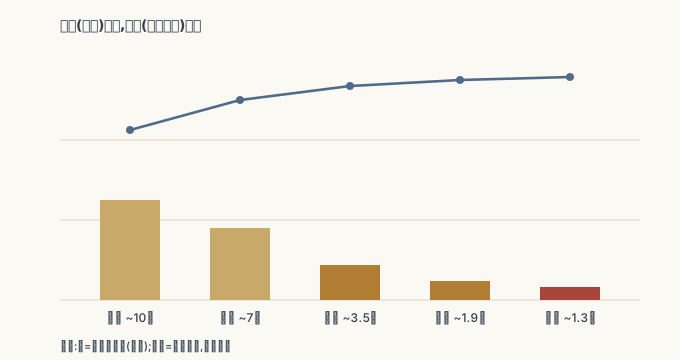
The odometer only moves forward; buying pressure lives only on the throttle.
SECURE PAYMENT VIA STRIPE
Subscribe: $50 annual pass unlocks every paid article on this site for one year
Go deeper: Ko-fi members get a weekly members-only deep dive, from $3/month Become a member →