The 10-Year Treasury Yield Just Hit a Three-Year High and the Fed Hasn't Voted Yet — a Rate Hike Was Never a Meeting's Decision, It's a Signature the Yield Curve Writes Every Day!
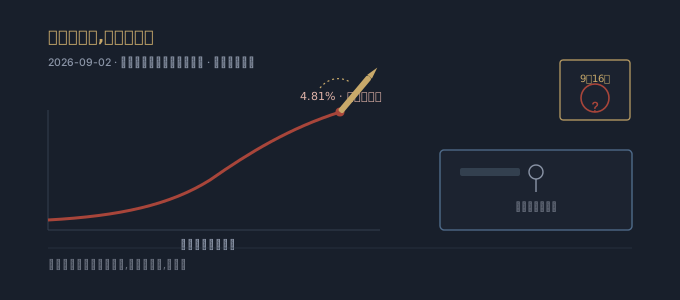
The moment the 10-year Treasury yield hit its highest level in nearly three years, the Federal Reserve hadn’t cast a single vote.
On Wednesday, September 2 in New York, the 10-year Treasury yield touched an intraday high of 4.81% — a level unseen since November 2023. The 30-year yield that same day held comfortably above 5%, just a step below the 2007-era high it set back in August. Yet flip the calendar forward: the Fed’s next policy meeting isn’t until September 16, and the federal funds rate is still pinned at 3.50%-3.75%, a range that hasn’t moved an inch through several straight meetings. Yields are racing higher. The rate hike itself hasn’t even walked through the door of a vote yet.
Most people read these two facts as a sequence: the market is waiting for a cliffhanger to resolve, and until it does, bonds are just getting restless on their own. That’s a common misreading — mistaking a price recalibrating itself for anxiety about a meeting’s outcome. The order is actually reversed. The market isn’t waiting for the Fed to speak; the Fed hasn’t spoken yet because the price has already written the answer. In just a few days, traders’ odds of a September hike have run from just over 50% to past 66% — that’s not “guessing whether it happens.” That’s the entire yield curve beating the committee to the punch and doing the job itself, in advance.
This is where “price is a piece of credit” earns its keep. Borrowing costs were never a switch that only flips when a central bank convenes — they’re the rate written, right now, into millions of individual lending contracts being signed across the market. When the 10-year climbs, mortgage rates, corporate bond yields, and equity discount rates climb with it. Tightening doesn’t wait for a signed statement on September 16 — it’s already underway. The Fed’s vote looks less like the event itself and more like a notary showing up late: it certifies something that already happened; it doesn’t make it happen.
The most interesting part of this mechanism is that it can undercut itself — in either direction. Run it one way: if everyone bets on a hike, long rates rise first, borrowing gets expensive first, and real demand — corporate investment, home purchases — cools first. If demand actually cools, inflation actually comes down, and by September 16 the Fed may not need to hike at all. The market does the tightening for free, and the central bank gets to sit this one out. Run it the other way: if the market shrugs the whole thing off as all bark and no bite, long rates stay put, financial conditions never really tighten, the risk of inflation running hot never actually clears — and eventually the Fed is boxed into hiking for real. A bet that pays off cancels its own reason for existing; a bet that falls short talks itself into becoming true. That isn’t a contradiction. At bottom, that’s exactly what reflexivity looks like: expectation was never a spectator standing outside the outcome — it’s a stretch of the road leading straight into it.
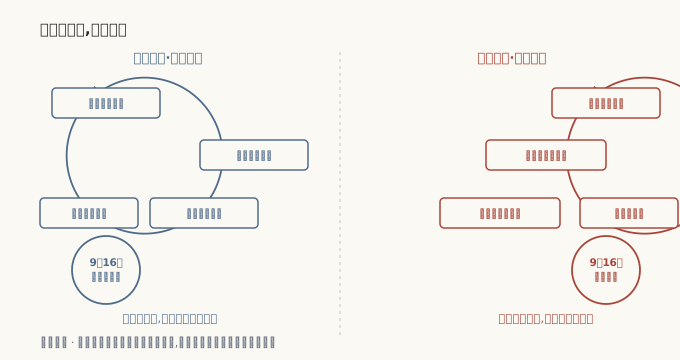
That same Wednesday, the stock market cast an entirely different ballot: all three major indexes closed green, snapping a three-day losing streak. Bonds were writing “tightening is already underway.” Stocks were writing “business as usual, carry on.” Neither one is wrong. They’re two different accounts on the same distributed ledger, and there’s no rule saying two accounts have to show the same balance — the interest-rate ledger and the earnings ledger were never the same book. Forcing the two into a single, unified verdict is the real sweeping generalization here.
At bottom, everyone’s staring at September 16 hoping for a ceremonial moment — as if without the gavel coming down, the rate hasn’t really moved. That mistakes an authority’s signature for the thing itself. Price doesn’t hold meetings. It has no agenda, no podium, no majority vote required — millions of real-time trades are themselves a referendum that never adjourns, tallying votes and posting results every single second. People like waiting for a stamped answer because a stamp feels safe. But the world’s ledger was never built to pause its own settlement for anyone’s calendar.
A rate hike was never voted into being at some meeting. It's a signature the entire yield curve writes on everyone's behalf, every single day.
SECURE PAYMENT VIA STRIPE
Subscribe: $50 annual pass unlocks every paid article on this site for one year
Go deeper: Ko-fi members get a weekly members-only deep dive, from $3/month Become a member →