Nvidia Added $150 Billion to Its Buyback Monday, Taking the Total to $235 Billion, and Rose Nearly 2% Against a Weak Tape — the Same Day Arm Sank Past 8%, Falling Twice as Hard as Qualcomm and Marvell. The Gap Was Never About Orders — It Was SoftBank Pledging Arm's Own Stock for a Margin Loan It Has Tripled in Three Years. Whether Leverage Is Backed by Cash Flow or by Price Itself Decides Whether It's Insurance or a Noose!
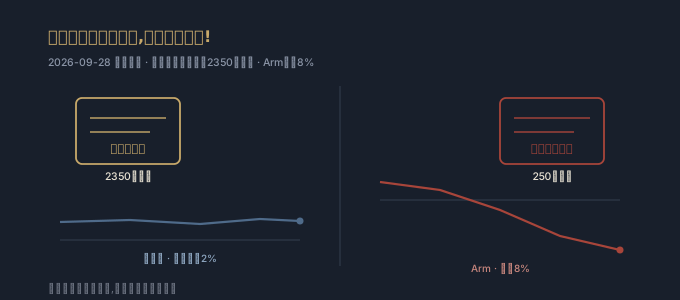
Leverage was never an abstract rope. What it’s tied to decides whether it’s insurance or a noose.
Monday, September 28 (US Eastern), Nvidia did something almost plain in its logic: it wrote itself a blank check in advance. The money behind that check wasn’t borrowed — it was cash flow the company had actually earned over the past several quarters — and the check had exactly one use: buy back its own shares off the open market, whenever it wanted. This round added $150 billion to the authorization, taking the total available to $235 billion. The broad market wasn’t strong that day; the Philadelphia semiconductor index and most of its members slid. Nvidia rose against that grain, up roughly 2%. That’s not luck. It’s the plainest kind of positive feedback there is: the company earns cash first, spends that cash buying its own stock, the float shrinks, the profit backing each remaining share goes up, and the price gets a floor built from fundamentals. Going up, that floor is a tailwind that rides the current. Going down, it’s a cushion built out of real money already banked — because it’s welded to cash flow the company keeps generating on its own, and it doesn’t answer to anyone else’s mood.
The same day, another name in the same sector gave almost the opposite answer. Arm sank past 8% that day, falling far harder than sector peers Qualcomm and Marvell. The cause wasn’t Arm’s own orders or its earnings. It traced back to Arm’s majority owner, SoftBank, which had pledged its own Arm shares as collateral for a margin loan. That loan has been expanded three times over three years, from an initial $8.5 billion to $25 billion now — the war chest funding SoftBank’s spree of AI bets. But strip the collateral behind that money down to what it actually is, and there’s only one thing there: not how much Arm will earn, but what Arm is worth this exact second.
This is the same act of “self-reinforcement,” tied to two completely different things. Nvidia’s loop is tied to cash flow: ① earn money → ② buy back stock → ③ profit per share rises → ④ price gets support. Run that loop in reverse and the worst case is buying a bit more slowly — the cash flow itself doesn’t vanish. SoftBank and Arm’s loop is tied to the price itself: ① stock rises → ② collateral gets more valuable → ③ loan capacity grows → ④ more money flows into the AI story. But once that loop turns — ① stock falls → ② collateral shrinks → ③ the loan’s safety margin thins → ④ the market starts worrying about a margin call or forced selling — step four itself pushes the price down further, feeding straight back into step one, and the fall accelerates. This isn’t some unlucky pile-on. It’s the same arithmetic, run in the opposite direction. Once the dust settles, it becomes obvious: the thing that held the price up on the way up and the thing that punched through it on the way down were the exact same piece of collateral all along. Fundamentally, whether leverage is backed by cash flow or by price itself decides whether it’s insurance or a noose.
This isn’t a rule that belongs to two chip companies alone. In any complex system, every loop that looks like “self-reinforcement” eventually has to answer the same question: what’s welded to the other end of it — something that gets produced continuously, or a number the loop generates about itself? Cash flow is the former. It comes from the real world outside the company, and spending it doesn’t stop more of it from growing back. Price is the latter. It’s the output the loop calculates about its own state, and pledging it as collateral means pledging a result to secure its own starting point. People conflate these two kinds of self-reinforcement easily, because on the way up they look identical — both get called confidence, both get called leverage, both sit in the same line of the same balance sheet. But a complex system never cares what that line is labeled. It only cares what’s wired to the other side of the gate: wired to reality, and the system is computing. Wired to itself, and the system is gambling.
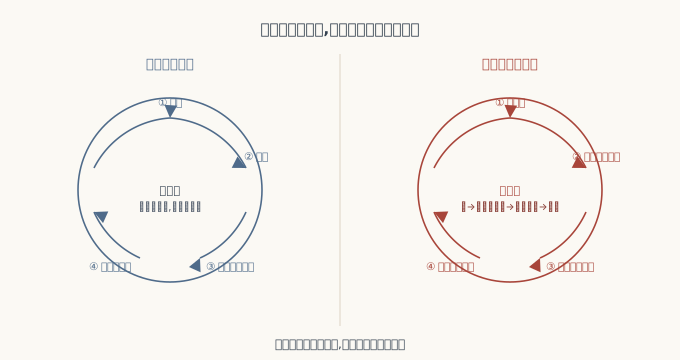
Pledge your own price as collateral, and going up, you're borrowing. Going down, you're kneeling before that same price.
SECURE PAYMENT VIA STRIPE
Subscribe: $50 annual pass unlocks every paid article on this site for one year
Go deeper: Ko-fi members get a weekly members-only deep dive, from $3/month Become a member →