Broadcom's AI Chip Revenue Just Grew 221% Year Over Year and the Stock Still Closed Down Over 3% — What Gets Rewarded Was Never the Earnings, It's Whether the Earnings Beat the Number Price Had Already Written In!
Two opposite readings were circulating at once. One says Broadcom just posted a record-shattering quarter and the stock still fell, so this is a classic overreaction — buy the dip. The other says even a bellwether like Broadcom just guided below expectations, so the AI capex story is starting to cool. Both readings share the same blind spot: they’re staring at the move and never once looking back at the ruler that scored it.
The US trading session behind this morning’s (September 4) Beijing close was Thursday, September 3 in New York. The evening before, Broadcom reported fiscal third-quarter results: revenue of $29.6 billion, up 86% year over year — roughly the difference between doing ten dollars of business a year ago and doing close to nineteen dollars of the same business now. This wasn’t a quarter that scraped by. It buried every prior quarter the company had ever posted.
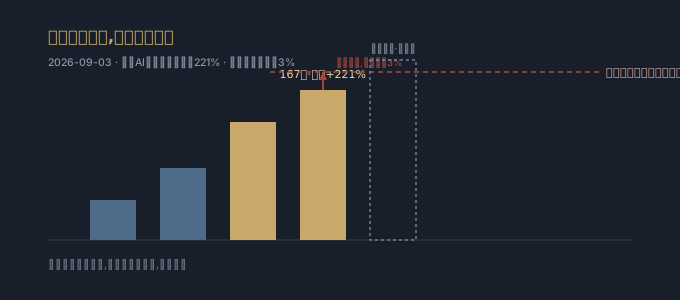
What actually carried that scorecard was the AI chip business, and it didn’t just take a solid step forward — for the second straight quarter, it outran its own prior best by a wide margin. Here’s the reconciliation: AI semiconductor revenue hit $16.7 billion, up 221% year over year and up 54% from the prior quarter alone — meaning a dollar of AI chip sales a year ago is now worth more than three dollars today, and that tripling wasn’t built up slowly over twelve months. It came from three months on top of an already-huge base.
And on the day that scorecard landed, Broadcom’s stock closed down more than 3% — roughly three dollars gone from every hundred dollars of market value in a single session. The same day, the S&P 500 and Nasdaq both rallied, snapping their own losing streaks. Same AI story, same trading day, one line falling while the other climbed.
Here’s the part that actually explains it: price never applauds the earnings themselves. What it applauds is never “how much Broadcom made this quarter” — it’s “whether what Broadcom made beat the number price had already written in.” That sounds circular until you unpack it: price isn’t a grade on the past, it’s what’s left over after the market has already priced in everything everyone already knows. “AI chip revenue is growing explosively” stopped being news months ago — it had gotten faster every single quarter, and the market had long since priced in “keep getting faster” as the baseline. On earnings day, what actually moves the stock was never the size of the growth number. It’s whether the sentence about the future beats the sentence the price had already written for itself.
That sentence about the future is the fourth-quarter guide. Broadcom guided to $34.8 billion. The Street had modeled $35.03 billion. The gap is under $300 million — well under 1% of the estimate. And that sliver of a miss produced a stock reaction several times its own size — a single step short of the line, and the whole quarter got marked down for it. This isn’t the market doing bad arithmetic. It’s the market treating “beat the number” itself as the price of admission to owning the stock — and the moment that sentence about tomorrow fails to clear the bar price already set, the ticket gets voided, no matter how good everything else in the report was.
The other half of this mechanism is that it reinforces itself in both directions. Run it one way: if the forward sentence really does beat what price expected, the stock rises — and that rise itself drags the bar for next time even higher, so satisfying the market next quarter takes clearing a threshold that’s now a notch taller. Run it the other way: if this quarter’s forward sentence falls short, the stock falls — and that drop itself makes the market discount its next guess a little, loosening the bar and making next quarter’s “beat” easier to clear. A rise happens because you cleared yesterday’s bar. A fall happens because you didn’t. The bar itself is the real protagonist of this game — earnings is just the thing standing still, getting measured against it.
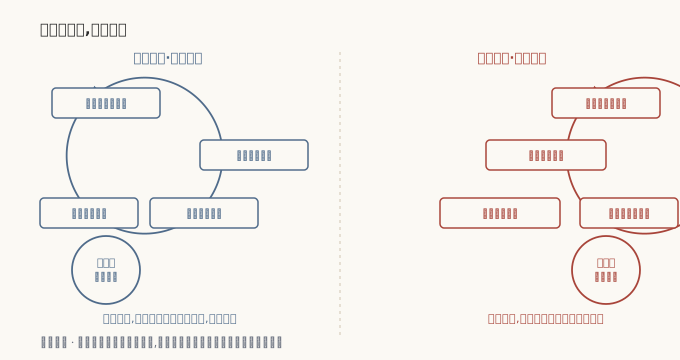
Back to the two readings from the top. The “market overreacted, buy the dip” crowd misses this: the market was never voting on whether Broadcom is a good company. It was voting on whether Broadcom beat yesterday’s bar — and if it didn’t, no amount of underlying quality buys the stock a rally that day. That isn’t a mispricing to be corrected. That’s simply how price does its job. The “AI story is cooling” crowd misses the other half: the fourth-quarter AI revenue guide actually implies a year-over-year growth rate higher than this quarter’s already-blistering 221%. What’s actually decelerating isn’t the AI business itself — it’s the pace at which the quarter-over-quarter climb is accelerating, easing back a notch from this quarter’s 54%. At bottom, the first derivative never stopped. What shifted is the second derivative — the rate of acceleration stopped accelerating quite as fast. Reading “the acceleration eased a little” as “the car stopped” is the same sweeping generalization as reading “the bar moved up” as “the student got worse.”
People naturally reach for a clean verdict — good news should send a stock up, bad news should send it down, because that’s the version that requires no further thought. But a complex system was never built to keep books that lazily. What it actually tracks is always relative: what you delivered, measured against however much the market has quietly raised what it expects. That bar climbs a little every single day, and how fast it climbs depends on whether yesterday’s guesses got vindicated. Winning this game consistently was never about making the numbers as big as possible — it’s about seeing clearly, every single time, whether this quarter’s “good” actually outran the bar that was quietly growing taller while nobody was watching.
What fell wasn't the company. It was a sentence about tomorrow that failed to outrun the answer price had already written for it, yesterday.
SECURE PAYMENT VIA STRIPE
Subscribe: $50 annual pass unlocks every paid article on this site for one year
Go deeper: Ko-fi members get a weekly members-only deep dive, from $3/month Become a member →