The FT Says OpenAI's Annualized Revenue Is About $50 Billion, Not the $70 Billion Everyone Was Quoting, the Nasdaq Fell 1.25% Thursday, and the Market Says "AI Demand Just Got Marked Down" — But the Missing $20 Billion Is Not Demand, It's Bookkeeping: Revenue Is Not a Number, It's a Ruler!
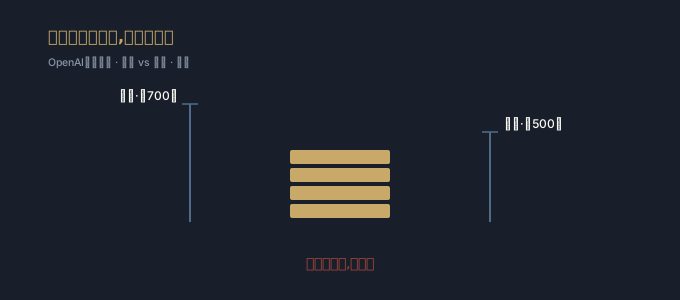
Revenue is not a number. It is a ruler.
At Thursday’s close in New York (October 8), the Nasdaq Composite was down 1.25%, Nvidia was off about 3%, Micron about 5%, and almost every name in the AI supply chain went with them. The trigger was a Financial Times report: OpenAI had told investors its annualized revenue at the end of September was approaching $50 billion, against the roughly $70 billion that had been circulating in the market.
The popular reading formed within minutes: AI demand just got marked down by $20 billion, and the cash-burn story needs to be re-underwritten.
That reading skips one question: who “lost” the $20 billion, and where did it go?
According to the reporting, the $70 billion never came from OpenAI. Investors produced it themselves, trying to line OpenAI up against its rival Anthropic. The difference is how each side counts. Anthropic books sales made through its cloud partners at the full amount; OpenAI books on a net basis, recording only the slice it actually keeps. Think of a restaurant that sells $100 of food through a delivery app, and the app takes a cut. One ledger says “my sales were $100.” The other says “what I kept was what is left.” Neither one lied. They just weren’t measuring the same thing.
So what happened Thursday was less a $20 billion hole in demand than a change of ruler. By the reporting, the gap sits in the partners’ share, and the customers’ money did not evaporate. It moved from one ledger to another. At bottom, revenue is not a fact lying around in the world; it is the output of “what you count, and how you count it.” Revenue is not a number. It is a ruler.
Why does the ruler matter? Because everyone along the AI chain is using that number as proof of someone else’s demand. Valuations of chips, optical modules and memory rest on the claim that the customers downstream are growing revenue like crazy. Change the number, and the haircut applied to the whole chain has to be recomputed. It is a classic reflexive loop: the revenue figure props up valuations, high valuations make funding cheap and spending easy, and the spending gets read as demand, which lifts the next revenue forecast.
Run it forward and backward. When the ruler flatters you: ① gross counting makes revenue look big, ② the big number makes growth look fast, ③ fast growth earns a high multiple, ④ the high multiple makes funding cheap — the number is financing the story. When the ruler turns: ①′ the basis gets aligned and the number shrinks, ②′ a smaller number reopens doubts about growth, ③′ doubt compresses the multiple, ④′ a lower valuation makes funding dearer — the same pile of money, nothing has simply vanished, and yet the story has lost weight.
Here is where it is easy to go wrong the other way: “It’s only accounting, so nothing to see.” No. The alignment retired a number that should never have been trusted; it did not retire the risk. A net $50 billion still has to be carried by future growth, and that growth has to carry an enormous amount of spending upstream. What is different now is that you finally know which ruler is in your hand. And using “different basis” as a blanket excuse to dismiss the selloff is just as lazy. Thursday’s price was not wrong. It gave back a piece of certainty that had been borrowed.
Early in a trend, one number becomes the common language and nobody asks how it was produced, because it keeps rising. Late in a trend, everyone cross-checks each other with that number, and nobody checks which ruler produced it. A small act of alignment is then enough to make the whole chain flinch. In essence, the market was not frightened by bad news. It was frightened to discover that it had been using different rulers all along.
And that is a very human kind of laziness: when a number is large and tidy, we take it as true, and only when it is taken apart do we think to ask how it was counted. The system never lacks information. What it lacks is the patience to go back and check the ruler.
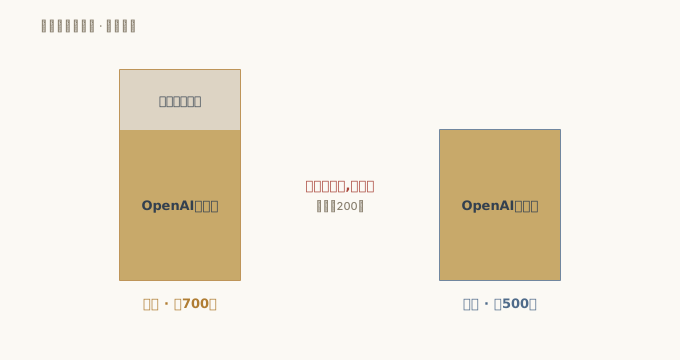
Prices never fear bad news; they fear discovering that the same money was being measured with different rulers.
SECURE PAYMENT VIA STRIPE
Subscribe: $50 annual pass unlocks every paid article on this site for one year
Go deeper: Ko-fi members get a weekly members-only deep dive, from $3/month Become a member →