TSMC's August Revenue Just Jumped 53.3% Year Over Year to an All-Time Record, and Nearly Every Outlet Reported It the Same Way — "AI Chip Demand Is So Strong Supply Can't Keep Up"; But When Fab Construction Is Already Running at Four to Five Times Its Historical Pace and Still Can't Catch Up, What's Really Climbing Inside That 53.3% Was Never the Chips. It Was the Price!
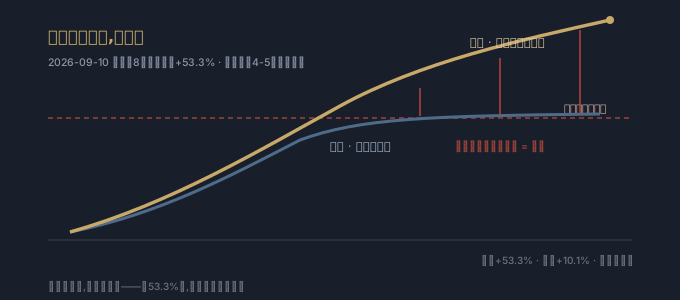
Inside that 53.3%, what’s climbing was never the chips. It’s the price.
On Thursday, September 10 in New York, TSMC reported its August revenue: NT$514.8 billion, up 53.3% year over year and up another 10.1% from July — the highest month the company has ever posted, and its fourth consecutive record. That’s the difference between doing a hundred dollars of business this month last year and doing roughly a hundred and fifty this same month now. The headlines wrote themselves. From Bloomberg to CNBC, nearly every outlet landed on the identical sentence: AI chip demand is so strong, supply simply can’t keep up. Not a word of that is technically false. But it quietly does something sloppy — it treats “how much revenue grew” and “how many more chips got built” as the same fact, when they’ve never been the same fact at all.
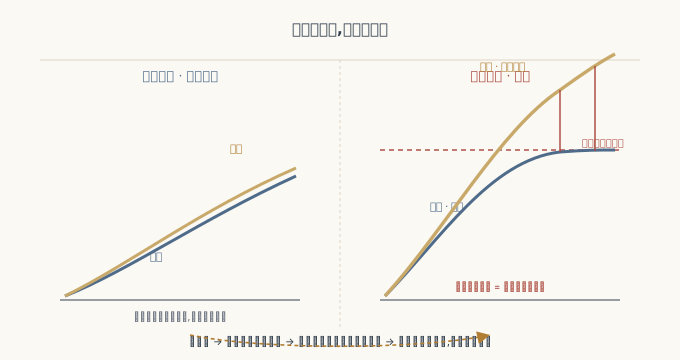
A factory’s revenue is always the product of two numbers multiplied together: how many chips it made, times what each chip sold for. Volume and price move at completely different speeds. Volume has to wait for concrete to be poured, tools to be installed, yields to climb — none of those steps can be skipped, and the whole process typically takes two to three years. Price can change the moment a new contract gets signed. TSMC’s own management put it plainly when asked about capacity recently: the company is now building fabs simultaneously at four to five times its historical pace, and it’s still losing ground against its own order book. Capacity has been pinned against a hard physical ceiling — and if revenue is still climbing 53.3% on top of that ceiling, the extra growth can’t possibly be coming from more chips rolling off the line. It has nowhere left to come from but the price tag on each one.
This isn’t a story unique to TSMC’s books — it’s the same arithmetic running through the entire supply chain. Back in the first quarter of 2026, contract prices for ordinary server memory rose nearly 100% in a single quarter, close to doubling outright. That wasn’t because the world suddenly wanted twice as much memory. It was because AI servers had crowded out the wafer capacity that used to go to laptops and phones, and whatever was left had to be rationed by price rather than by output — scarcity was forcing the price up, not summoning new wafers into existence. By the third quarter, that same contract-price growth is forecast to slow to something like 10-18% — a gentler number, but pointed in exactly the same direction. What’s decelerating is the speed of the price increase, not the increase itself. That’s precisely what separates the early stage of a trend from its late one: early on, capacity can still keep pace with demand, so new orders get filled mostly by making more and shipping more, and price stays a supporting actor. By the late stage, capacity has already hit the ceiling, and price alone has to carry the growth — doing the job of two.
Here’s the part that actually matters: the real danger was never in the phrase “can’t keep up.” It’s in how people choose to read it. When everyone in unison reads a price spike as a demand spike, that reading itself becomes an invitation — an invitation to commit even more capital chasing a signal that price has already amplified. In just the past two weeks, more than one cloud giant has raised its own compute-purchase commitments, every single time citing “demand is simply too strong,” each one racing not to be the one left behind. But commitments signed today don’t turn into wafers that can actually ship for another two to three years. That’s the long-delay reflexive loop sitting underneath all of this: rising price pulls in more commitments; more commitments pull in more capacity planning; and by the time that capacity actually lands, if demand growth has cooled even slightly — say, from blistering down to merely fast — today’s price-amplified optimism gets converted, unchanged, into tomorrow’s oversupply. A small wobble in end demand, by the time it travels up to the capacity-planning spreadsheets at the very top of the chain, has already been amplified into either a party or an avalanche. This is the bullwhip effect, and no industry that chases a price signal with capital spending has ever fully escaped it.
What’s genuinely interesting is that on the very day this record-breaking report landed, TSMC’s own stock closed down 0.61% — not up. That isn’t bad news. It’s actually the most honest confirmation available: the market had already run the mental math on 53.3% long before the number was printed, and today’s release simply checked that the arithmetic came out right. At bottom, a surprise that’s already been priced in, over and over, has stopped being a surprise at all — it’s just a number confirming what everyone had already decided to believe.
So don’t misread this earnings report. It doesn’t prove “AI demand is out of control.” It proves “capacity has stopped being able to work overtime” — two facts that sit right next to each other but describe entirely different things: one is about what people want, the other is about what the system is physically able to hand over. Price was never in the business of advertising demand on demand’s behalf. Its only job is to honestly post a number for scarcity the moment supply hits its ceiling. People, instead, keep reading that honest price tag as a flattering sequel about how right their own judgment was, and how good the story sounds.
Price was never a love letter demand wrote to the world. It's the receipt the system leaves behind the day capacity finally runs out of room.
SECURE PAYMENT VIA STRIPE
Subscribe: $50 annual pass unlocks every paid article on this site for one year
Go deeper: Ko-fi members get a weekly members-only deep dive, from $3/month Become a member →