The Fed Minutes Wrote AI Spending Into the Upside Risks to Inflation, Stocks Slipped From Records on Wednesday, and the Crowd Says "AI Is Disinflationary, Rates Are Noise" — But AI Capex Is Not Growth Immune to Rates, It Is a Bidder for Them!
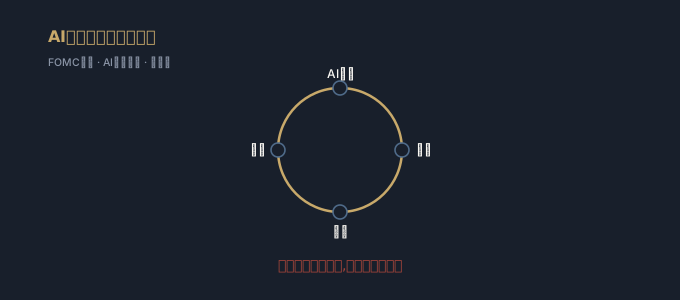
AI spending is not growth outside the reach of interest rates. It is a bidder for them.
On Wednesday, October 7 (US Eastern) at 2 p.m., the Fed published the minutes of its September 15–16 meeting. At that meeting it had raised rates by a quarter point, to a range of 3.75% to 4.00%, the first hike since 2023. The minutes said most participants thought another increase would likely be appropriate by year-end. Stocks backed away from Tuesday’s records: the S&P 500 and Nasdaq each fell about 0.2%, the Dow about 0.6%. The 30-year Treasury yield settled near 5.7%, which means that for every $100 borrowed for thirty years, you pay more than five dollars a year in interest alone.
The popular line formed right on cue: AI is a deflationary force. Productivity rises, costs fall, and rates are short-term noise that the AI story can ignore.
That line rests on a premise nobody inspects: that AI investment stands outside the interest-rate system. It doesn’t.
One sentence in the minutes got skipped by most readers. Some participants remarked that the AI buildout could cause aggregate demand to outpace aggregate supply over the medium term, putting upward pressure on inflation. The same document gives the other side too: participants broadly saw AI investment as likely to support productivity and potential output, and differed over how much and how soon. The same dollar has two faces: tomorrow’s efficiency on one side, today’s price on the other.
Here is the mechanism. A dollar of AI capex buys chips, racks, electricity, land, engineers. None of these appears out of thin air; in the short run, supply is fixed. When demand piles in, prices move first: chips, power, and then the whole chain behind them. Higher prices mean stickier inflation, and stickier inflation means the central bank holds rates higher. At bottom, AI capex does not spend outside the rate system. It sits at the same auction as mortgages, corporate bonds and Treasuries, bidding for the same limited pool of savings. It is not exempt from the price of money. It is one of the bidders that sets it.
Run the loop both ways. When money is cheap: ① funding is easy, so AI spending runs bigger, ② bigger spending lifts expected revenue and profit, ③ expectations lift valuations, ④ higher valuations make the next round of funding easier — the spending manufactures its own growth story. When rates stay high: ①′ funding gets pricier, so each dollar must earn more to clear the hurdle, ②′ price pressure from the demand side keeps the central bank from easing, ③′ future cash flows are discounted more heavily back to today, so valuations compress, ④′ compressed valuations make funding harder still. The same dollar slides from the “growth” column to the “inflation” column. That is reflexivity: AI pushes up rates, and rates reach back to price AI.
So Wednesday’s pullback is better read less as “bearish AI” and more as a system recalculating. Growth is running on one side and prices on the other, and which one runs faster decides the discount the market applies to the future. In the early stage, AI is a story with only a growth face. Once it grows large enough to move the price of money itself, it acquires a second face.
None of this says AI will fail, and it certainly isn’t a sell signal. The productivity side may well prove right, and if it arrives fast enough, it will absorb its own price pressure. The minutes themselves disagree on timing. What can be said is narrower: using “AI is disinflationary” to prove “rates don’t matter” reads only one page of the ledger.
In essence, a demand large enough eventually becomes part of the price system. It stops being the observer and becomes a participant; it is no longer only the thing rates value, but one of the voices bidding rates up.
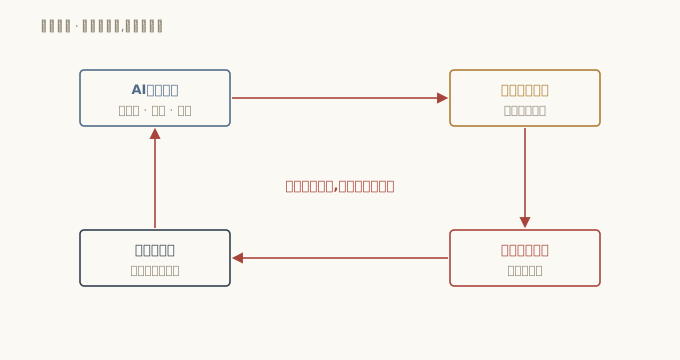
When a pool of money grows large enough to move the price of money, it stops being only the one being priced, and becomes one of the bidders.
SECURE PAYMENT VIA STRIPE
Subscribe: $50 annual pass unlocks every paid article on this site for one year
Go deeper: Ko-fi members get a weekly members-only deep dive, from $3/month Become a member →